


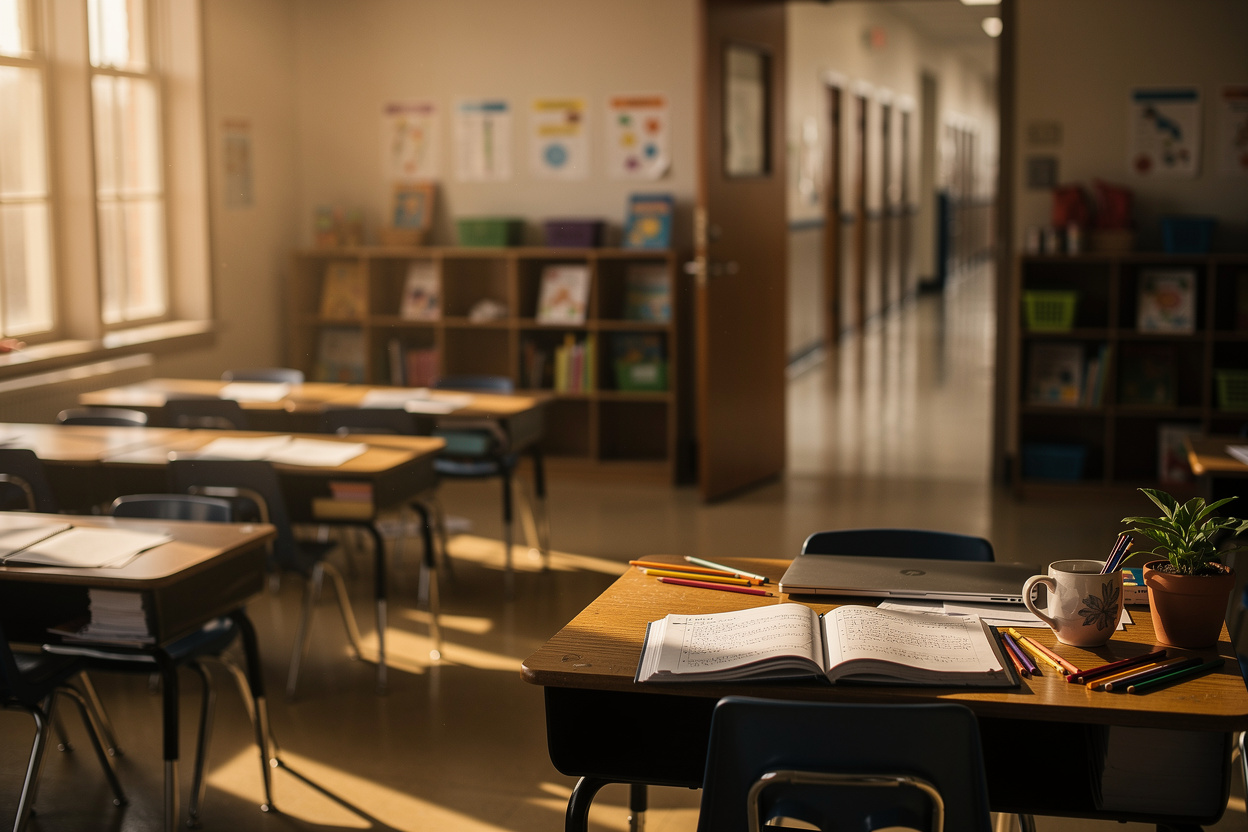
No one has really been in your room since the walkthrough in October, and that one lasted four minutes. Your reviews are fine. Families seem happy. You have not heard a complaint in two years. By every signal available to you, things are going well. And still, if someone asked you today whether the way you teach reading is working as well as it could, you could not answer with any confidence. That is the quiet problem, and if you teach at a private or independent school, you have probably never heard anyone say it out loud.
The freedom is real. So is the silence.
People choose private and independent schools for the autonomy, and the autonomy is not a myth. You likely chose your novels. You built the unit yourself instead of opening a boxed curriculum on page 47. When a lesson was not landing on Tuesday, you changed it on Wednesday without asking anyone. That is real professional trust, and it is one of the best things about the work.
Here is the part nobody puts in the hiring conversation. The same structure that hands you that much freedom usually hands you very little response. You teach for a year, and the total amount of time another adult spends watching you teach and then talking with you about it might be measured in minutes. Not because your school does not care. Because there is no one whose actual job that is.
So you fill the gap yourself, with the signals you can reach. Test scores. Parent emails. Whether the room felt right. Whether anyone complained. Those are all real information, and none of them tell you what you most want to know, which is whether the specific moves you make while teaching are the right ones.
Why 'no news is good news' is not actually good news
Walk into most small schools and you will find a feedback culture built almost entirely out of silence. If something were wrong, someone would say something. Nobody has said anything. So things must be fine.
That logic works for management. It does not work for growth. Silence is not a measurement. It is an absence of measurement, and it means exactly the same thing whether you are having your best year or drifting into a habit you cannot see. A teacher who has quietly stopped checking for understanding before moving on gets the same silence as a teacher who is doing it beautifully. Both hear nothing. Both conclude nothing is wrong.
And the silence goes both directions, which is the part that surprises people. Your division director is often just as unsure. They know you are good. They have almost no specific evidence of what you do well, so when they want to grow the whole faculty, they are guessing at what to offer. This is why so much private school professional development arrives as a one-day workshop on a topic that has nothing to do with your Tuesday. It is not laziness. It is that nobody has the information required to aim.
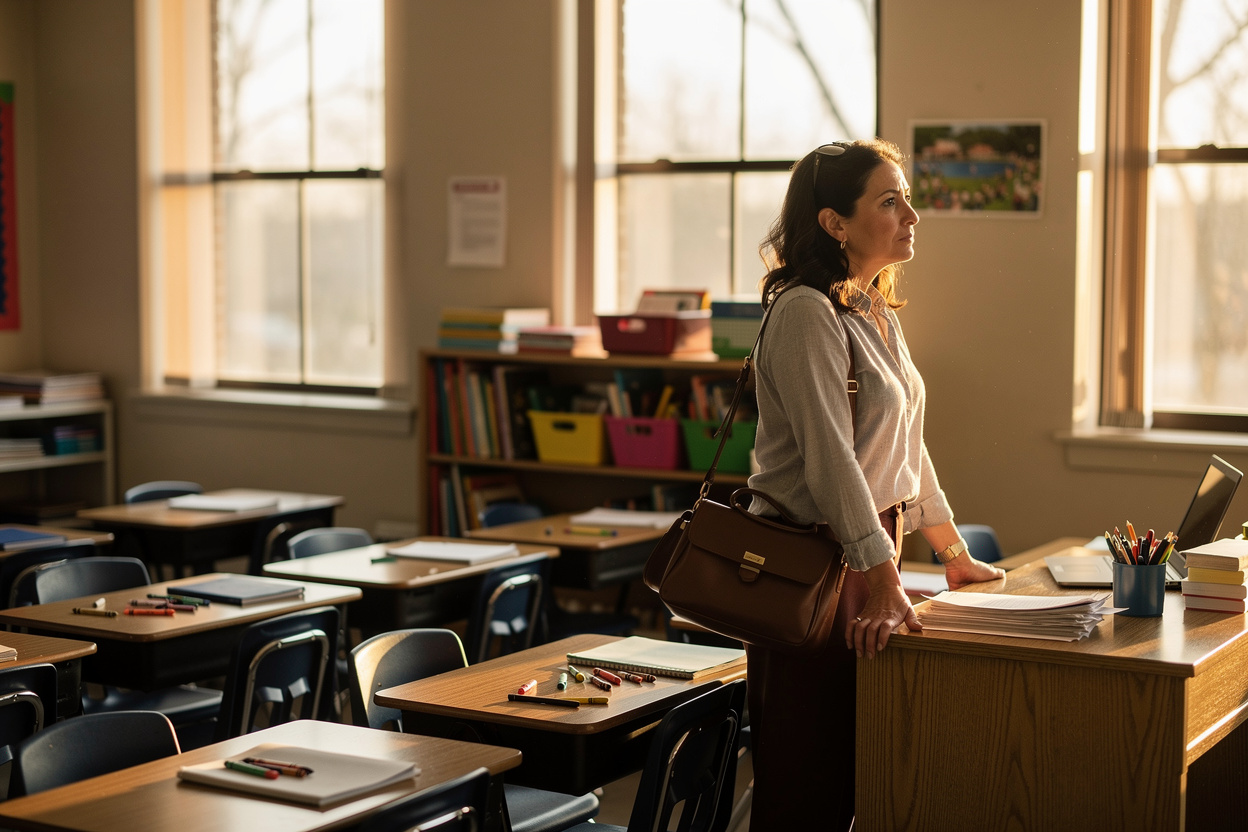
The result is a building full of skilled, trusted adults, each one working carefully in a room by themselves, none of them able to see the others, all of them reading silence as approval.
What the quiet costs
The first cost is a plateau you cannot feel from the inside. Teaching is one of the few skilled professions where you can practice for fifteen years and receive almost no specific response to your practice. Without that response, you get better for a while on your own, and then you level off, and the leveling off feels identical to being fine. Nothing tells you it happened.
The second cost is that new teachers absorb the silence as a verdict on themselves. Year one in a private school can be a very lonely stretch. You are handed real autonomy before you have the experience to know what to do with it, and then the building goes quiet, and you decide the quiet means you are the only one struggling.
There is a pattern in the national data worth putting beside that. In the 2021-22 federal Teacher Follow-up Survey, 12 percent of private school teachers left the profession within a year, compared with 8 percent of public school teachers. Among teachers with three years of experience or less, the gap is wider: 15 percent of private school teachers left, against 7 percent of their public school peers.[1]
Be careful with that number, because we intend to be. The survey is descriptive and the researchers say plainly that the results are not causal. Pay, benefits, school size, and a dozen other factors sit inside it. It does not prove that the feedback gap is why early-career private school teachers leave at roughly twice the rate. What it does say is that the first years in a private school are unusually hard to survive, and that is worth sitting with in a sector that prides itself on how well it treats teachers.
The third cost is the one teachers name most often when you ask. It is not that the work is too hard. It is that after a decade of doing careful work at a high level, almost no one has ever seen it.
What actually changes it
The instinct, once a school notices the quiet, is usually to build an evaluation system. Rubrics, observation windows, a rating at the end. That instinct is understandable and it tends to make things quieter, because the moment a classroom visit can affect your contract, you start teaching the version of the lesson that scores well. We wrote about why that line matters in Coaching vs. Evaluation.
What closes the gap is smaller and less official than that. Three things, in order.
Regularity over intensity. One person seeing fifteen minutes of your teaching every week does more than a formal observation once a year. Patterns only show up across time, and a pattern is the thing you cannot see yourself.
Description before judgment. The useful sentence is "your first three questions after the read-aloud were all recall questions," not "your questioning needs work." One of those you can act on tomorrow. The other one you can only feel bad about.
Complete separation from your job. The observation has to be structurally unable to affect your contract. Not promised to be safe. Actually separate. That is the only condition under which anyone shows the real lesson instead of the polished one.
None of that requires a budget line. If your school has no coach, we wrote a practical guide to running these moves yourself and with a peer in No Instructional Coach at Your School?. Start there this week.
How eduimpact fits, honestly
This gap is the reason eduimpact exists, and we want to be precise about what it is.
eduimpact is a second set of eyes for the teacher whose building was never staffed to provide one. It looks at what is actually happening in your teaching and reflects it back in plain description, so you can see the pattern and decide what to do about it. A real person reviews what it surfaces and applies judgment, so you are never talking to a black box. Nothing is rated. Nothing is ranked. Nothing goes to anyone who decides your contract.
It is not a coach, and we will not call it one. A coach is a human relationship, and the good ones are irreplaceable. What we built extends that kind of attention to teachers who have not had access to it, and gives the coaches who do exist enough reach to be present more than once a semester. It helps you think. It does not think for you.
If you have spent years teaching in the quiet, and you are ready for someone to finally see the work, join the beta waitlist.
A building full of skilled, trusted adults, each one working carefully in a room by themselves, all of them reading silence as approval.
Taie, S., & Lewis, L. (2023). Teacher Attrition and Mobility: Results From the 2021-22 Teacher Follow-up Survey to the National Teacher and Principal Survey (NCES 2024-039). U.S. Department of Education, National Center for Education Statistics. https://nces.ed.gov/pubsearch/pubsinfo.asp?pubid=2024039 ↩︎